

How Often Should Homes and Offices Be Disinfected?

How Often Should Homes and Offices Be Disinfected?
How often should homes and offices be disinfected is a question most people only ask after someone falls ill. A family member catches a stomach bug, or a few people at the office go down with the flu in the same week, and suddenly everyone wonders whether the space was as clean as it looked.
The honest answer is that it depends on the space, the people using it, and how much they touch. A quiet flat and a busy open-plan office need very different routines. A planned schedule, backed by the best disinfection service in coimbatore when deeper treatment is needed, takes the guesswork out of it.
Hygiene and pest prevention also work best together, which is why many households and businesses look for dependable pest control services in coimbatore alongside their cleaning routines. Let’s look at what a sensible schedule looks like.
Why Does Disinfection Frequency Matter?
Germs do not wait for a convenient time. Bacteria and viruses can sit on hard surfaces and pass from one person to the next through everyday touch. A door handle, a keyboard, a light switch: these are shared by many hands, many times a day.
Too little disinfection leaves those germs in place. Too much, or the wrong kind, can wear down surfaces, irritate skin and waste time and money. The goal is a balance that matches how your space is actually used.
Cleaning and Disinfecting Are Two Different Jobs
Cleaning removes dust, dirt and grime. Disinfecting uses approved products to reduce disease-causing germs on a surface. Disinfectants generally work best on a surface that has been cleaned first, because dirt can get in the way.
Most spaces need cleaning daily or weekly and disinfecting on a separate, planned rhythm. Treating them as one job is where many routines go wrong.
Frequency Depends on Footfall and Risk
A home with two adults has a different risk profile from one with young children, elderly relatives or someone with a weak immune system. An office with ten people differs from a clinic-style waiting area or a shared workspace with hot desks.
The more people, the more touching, the more often you need to act.
How Often Should You Disinfect Your Home?
There is no single rule that fits every household, but a layered routine works well for most.
Daily: High-Touch Points and Food Areas
Door handles, light switches, remote controls, phones, taps and kitchen counters deserve quick, regular attention. Kitchen surfaces that touch raw food, such as chopping boards and countertops, should be cleaned and disinfected after each use.
Bathrooms also need frequent attention. Toilet seats, flush handles, taps and basin surfaces collect germs fast, especially in a shared household.
Weekly: Wider Surfaces and Shared Items
Once a week is a reasonable rhythm for bathroom floors, bins, fridge handles, kitchen sinks, and shared items like game controllers or tablet screens. Bedding and towels should be washed regularly too, though that falls under laundry and not surface disinfection.
Every Few Months: Professional Disinfection
A deeper, professional treatment every few months can reach areas that daily routines miss, including corners, upholstery edges, wardrobes and less-used rooms. Households with babies, older family members or frequent visitors may prefer a more regular schedule.
After Illness: An Extra Round
If someone in the household has had a contagious illness, disinfect the surfaces they touched most, including bedside tables, door handles, shared bathrooms and anything they handled. Do this once they have recovered, and sooner if other people share the same space.
How Often Should Offices Be Disinfected?
Offices see more people, more shared equipment and more movement than most homes. That means the routine has to be tighter.
Daily: Workstations and Shared Spaces
Desks, keyboards, mouse devices, phones and chair armrests should be wiped down daily, ideally at the end of each working day. Hot-desking setups need extra care, since different people use the same desk and equipment within days or even hours.
Pantry areas, meeting rooms, lift buttons, door handles and washrooms are used by everyone and deserve daily attention. Printers, photocopiers and shared touchscreens collect germs quietly and are often forgotten.
Weekly: Deeper Surface Disinfection
A weekly round covering all common areas, reception counters, conference tables and break rooms helps reduce build-up. This is also a good time to check cleaning supplies and make sure staff have the right products on hand.
Monthly or Quarterly: Professional Disinfection
Many businesses schedule a professional disinfection monthly or quarterly. Busier offices, call centres and shared coworking spaces often lean towards monthly visits, while smaller offices may be fine with quarterly treatment. A trained team can cover the entire floor, including air-conditioning vents, storage rooms and other places that routine housekeeping tends to skip.
After Outbreaks or Renovations
If several staff members fall ill in a short period, a professional round can help reduce the chance of the problem continuing. The same applies after a renovation or a move into a new space, when dust and construction debris can carry contaminants.
What Factors Change the Right Schedule?
A schedule is only a starting point. A few practical factors can push it up or down.
How Many People Use the Space
More people means more contact. A crowded floor needs more attention than a small team room, even if the two are equally tidy.
Who Uses the Space
Children, older adults and anyone with a weak immune system are more vulnerable to infection. If they live or work in the space, a more frequent routine makes sense.
The Type of Business
Food outlets, clinics, schools, gyms and shared workspaces involve more contact and higher hygiene expectations than a quiet back office. Their routines should reflect that.
The Season and Local Conditions
Illness tends to spread more easily during certain seasons, when more people stay indoors or travel. Humid weather can also encourage mould and bacteria in damp corners. A schedule that stays flexible during these periods works better than one that never changes.
When to Arrange an Extra Round
Some situations call for disinfection outside the normal schedule:
- Someone in the home or office has had a contagious illness.
- Several people fall ill within a short time.
- You are moving into a new or renovated space.
- You are preparing for a baby, an elderly relative or a guest with a health condition.
- The space has been closed for a long time and is being reopened.
- You notice damp patches, odours or pests, which can point to a hygiene concern.
What Does Professional Disinfection Cover?
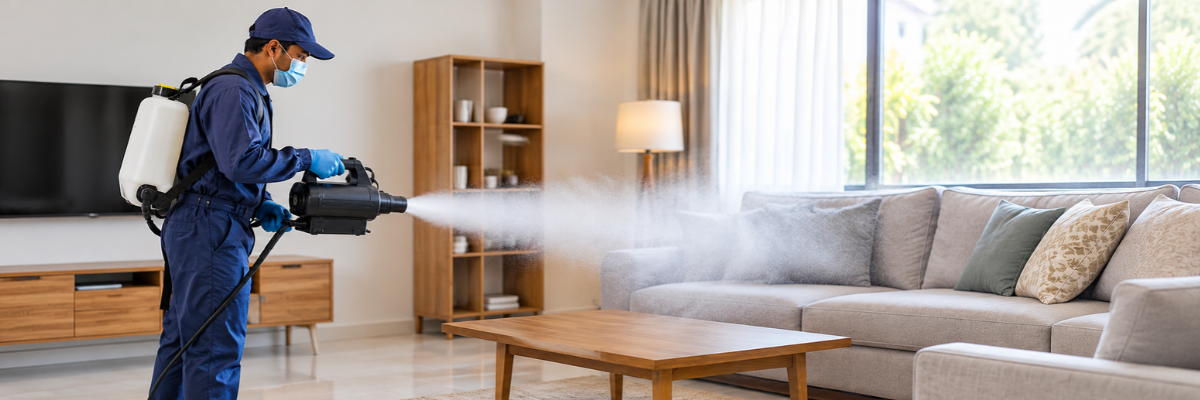
A good service begins with an inspection to find high-risk and high-touch areas. The team then applies approved disinfectants using methods such as spray or fogging, covering surfaces like handles, desks, furniture and common areas. Afterwards, the provider can share hygiene tips and suggest a schedule that fits the space.
What Mistakes Should You Avoid?
Even careful households and offices make a few common errors.
Disinfecting without cleaning first: Dirt and grease can reduce a disinfectant’s effect. Clean the surface, then disinfect it.
Wiping too quickly: Disinfectants need time on the surface to work. Wiping them off straight away may leave germs behind. Always check the label for the recommended contact time.
Using too much product: A stronger solution is not always a better one. Over-use can damage surfaces, irritate skin and leave residue. Follow the label instructions and never mix cleaning products.
Skipping the small items: Phones, remote controls, keyboards and shared pens are touched constantly but often missed.
Relying only on daily wipe-downs: Daily routines help, but they do not always reach corners, vents, upholstery and storage areas. A periodic deeper treatment fills that gap.
Ignoring pests: Cockroaches, flies and rodents can carry germs onto food and surfaces. A disinfection plan works better when pest problems are dealt with too.
Frequently Asked Questions
How often should homes and offices be disinfected?
For most homes, high-touch surfaces are best disinfected daily, wider surfaces weekly, and a professional treatment every few months. Offices usually need daily wipe-downs of workstations and shared areas, weekly disinfection of common spaces, and professional treatment monthly or quarterly depending on size and footfall.
What is the difference between cleaning and disinfecting?
Cleaning removes dirt, dust and some germs. Disinfecting uses approved products to reduce disease-causing organisms on a surface. Cleaning usually comes first, followed by disinfection.
Can you disinfect too often?
Yes. Over-using strong products can damage surfaces, irritate skin and eyes, and affect indoor air quality. Follow the product label and focus on high-touch areas instead of treating every surface every day.
Which areas should be disinfected most often?
High-touch surfaces come first: door handles, switches, taps, remote controls, phones, keyboards, kitchen counters, bathroom fittings and shared equipment.
Is professional disinfection necessary if I clean regularly?
Regular cleaning is the foundation, but professional disinfection adds trained inspection, suitable products and coverage of areas that daily cleaning often misses. It works best as a periodic addition to your routine, not a replacement for it.
Conclusion
Knowing how often homes and offices should be disinfected comes down to a few simple ideas: clean first, focus on high-touch points, match the schedule to how many people use the space, and add professional help for deeper coverage. A routine that fits your space is far better than one that is copied from somewhere else.
Start by listing the surfaces your family or team touches most. Build a short daily and weekly routine around them, and decide how often a deeper treatment makes sense.
Paradise Pest Control has experience working across residential, commercial and industrial properties, with over 20 years of experience and more than 5,500 clients served. When your routine needs extra support, understanding your space is the first step. You can also revisit this article on how often homes and offices should be disinfected to review the schedule before you plan your next round.