
What Happens When You Ignore Regular Disinfection?
A workplace may look clean, smell fresh and still have frequently touched surfaces that need more attention. Desks, door handles, keyboards, switches and shared equipment are used repeatedly throughout the day. For businesses looking for a more thorough hygiene approach, Best Disinfection Service in Coimbatore can complement routine cleaning, while businesses can also explore pest control services in Coimbatore as part of wider property maintenance.
Ignoring regular disinfection does not mean a property will immediately become unsafe. The concern is that microorganisms can remain on suitable surfaces between routine cleaning cycles, especially in places where many people share the same space.
Why Regular Cleaning May Not Be Enough
Cleaning and disinfection are related, but they are not the same. Cleaning removes dirt, dust and visible debris, while disinfection is intended to reduce microorganisms on appropriate surfaces.
For example, a reception counter may be wiped every evening. It can look perfectly clean, but several employees, visitors or customers may have touched it during the day. The same applies to door handles, shared phones, keyboards and switches.
This is why workplace hygiene should focus on both visible cleanliness and frequently touched areas. Professional disinfection can provide an additional layer of surface hygiene when it is appropriate for the property.
What Can Happen When Disinfection Is Neglected?
The first issue is that high-touch surfaces may not receive enough attention. A workplace has many contact points that people use without thinking, and these can be overlooked when cleaning is focused mainly on floors, desks and other visible areas.
Shared spaces can make the situation more complicated. Meeting rooms, pantry areas, reception counters, washrooms and common equipment may be used by many people throughout the day.
Neglecting disinfection can also make it harder to maintain a consistent hygiene routine. When there is no clear process, some areas may be cleaned frequently while others are repeatedly missed.
This does not mean that every workplace needs constant professional treatment. The sensible approach is to identify the areas that matter most and create a cleaning and disinfection routine around actual usage.
High-Touch Areas That Are Easy to Miss
Some of the most important surfaces are not necessarily the dirtiest ones. Door handles, lift buttons, light switches, taps and shared equipment can receive frequent contact without showing visible dirt.
Office electronics need particular care. Keyboards, mice, telephones and control panels should only be cleaned or disinfected using methods suitable for the equipment. Applying unsuitable products can damage surfaces or electrical components.
Pantries and common areas also deserve attention. Refrigerator handles, cupboard handles, countertops, tables and taps can all become frequent contact points.
A professional assessment can help identify these areas and determine which surfaces are suitable for disinfection. This is particularly useful for larger premises where it is difficult to keep track of every shared area.
Benefits of Maintaining a Regular Disinfection Routine
A consistent routine makes workplace hygiene easier to manage. Instead of waiting until an area appears dirty, businesses can give planned attention to surfaces that experience frequent contact.
Professional treatment can also provide systematic coverage. Paradise Pest Control describes its disinfection approach as including inspection and assessment, professional disinfection, comprehensive coverage and preventive guidance.
Another benefit is better awareness. Once high-touch areas have been identified, employees and cleaning staff can include them in everyday housekeeping rather than overlooking them.
Disinfection should still be viewed as part of a larger hygiene programme. Regular cleaning, hand hygiene, appropriate ventilation and sensible housekeeping continue to matter.
Common Mistakes Businesses Should Avoid
One mistake is assuming that visible cleanliness means a surface requires no further attention. Dirt and microorganisms are not always visible, so appearance alone is not a reliable measure of hygiene.
Another mistake is using excessive disinfectant. More chemical does not automatically mean better results. The product should be used according to its label, including the correct concentration and contact time.
Businesses should also avoid using one product on every type of surface. Electronics, fabrics, painted surfaces and food-contact areas can have different requirements.
Finally, a single professional treatment should not be treated as a permanent solution. People continue to enter, work and use the property, so new contamination can occur after treatment.
What Professional Disinfection Actually Involves
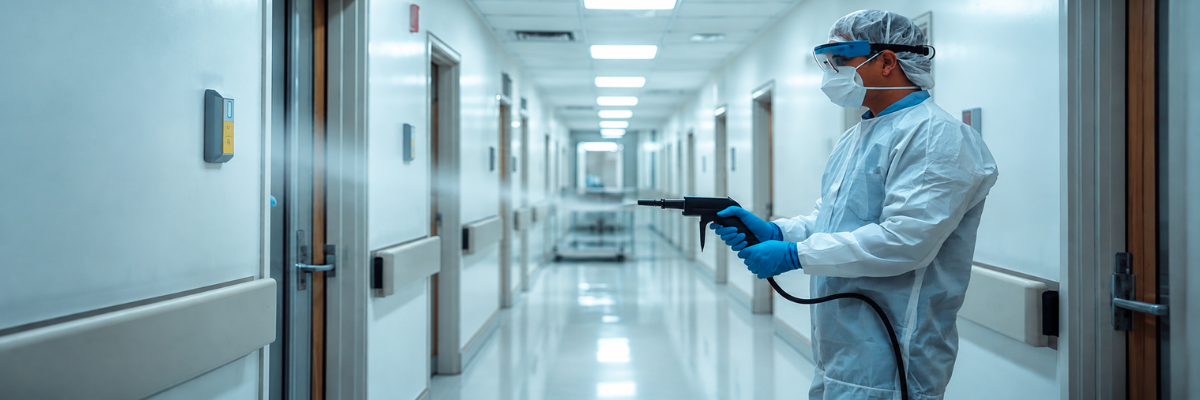
Professional disinfection should begin with an understanding of the property rather than immediately treating every surface. The type of premises, high-touch areas, shared facilities and surface materials can all influence the appropriate approach.
Paradise Pest Control’s published service information describes inspection, surface treatment and sanitization as part of its approach. The service is presented for different types of properties, including residential, commercial and other premises.
For a business considering professional treatment, the process may involve:
- Inspection: Identify frequently touched surfaces and areas requiring attention.
- Preparation: Follow instructions regarding people, food, personal belongings and sensitive equipment.
- Treatment: Apply an appropriate disinfectant using a suitable method.
- Contact time: Allow the product to remain on the surface for the time specified by the manufacturer.
- Ongoing care: Continue regular cleaning and follow any post-treatment guidance.
Businesses should ask what preparation is required before treatment and when employees can safely return. These details depend on the products and application methods being used.
Frequently Asked Questions
What is the difference between cleaning and disinfection?
Cleaning removes dirt and debris from surfaces. Disinfection is intended to reduce microorganisms on appropriate surfaces, so the two processes serve different purposes.
How often should a workplace be disinfected?
There is no universal schedule. The appropriate frequency depends on the type of property, occupancy, surface usage and specific hygiene requirements.
Which surfaces need regular disinfection?
Frequently touched surfaces are generally important areas to consider. These include door handles, switches, shared equipment, reception counters, taps, keyboards and other commonly used surfaces.
Can regular cleaning replace professional disinfection?
Regular cleaning remains essential, but it may not address every situation where additional surface disinfection is appropriate. Professional treatment can complement normal housekeeping when broader or more systematic coverage is needed.
Is one disinfection treatment enough?
Usually, one treatment should not be considered a permanent solution. Ongoing cleaning and hygiene practices are still necessary because people continue to use and touch surfaces after treatment.
Conclusion
Ignoring regular disinfection does not automatically mean that a workplace is unhygienic. The bigger concern is allowing frequently touched surfaces and shared areas to receive inconsistent attention over time.
A practical hygiene routine combines regular cleaning with appropriate disinfection, especially where many people share the same spaces. Businesses should focus on the actual needs of their premises rather than simply disinfecting more often or using more chemicals.
Paradise Pest Control brings more than 20 years of industry experience and states that it has served more than 5,500 happy clients. Businesses researching the subject can learn more by reading why regular cleaning alone may not be enough and considering how professional disinfection could fit into their existing cleaning routine.
The goal is not to create unnecessary treatment, but to make informed decisions about workplace hygiene. Where professional guidance is needed, businesses can discuss their premises, surface types and specific requirements before choosing an appropriate approach.