

How to Get Rid of Flies in Your Home Effectively

How to Get Rid of Flies in Your Home Effectively
Learning how to get rid of flies in your home effectively usually starts with one annoying moment. You sit down to eat, and a fly lands on your plate. You wave it away, and it comes straight back. By the evening, you have counted five more near the kitchen bin.
Flies are more than a nuisance. They feed on waste and spoiled food, then land on your plates and counters, so they raise real hygiene concerns. They also multiply fast. In hot weather, a few flies can turn into dozens within days, which often means a breeding site sits close by.
Flies rarely turn up without a reason. If you can find the source, you can fix the problem. If they keep returning despite your best efforts, a flies control service in coimbatore can trace the cause and treat it properly.
Many households and businesses also look for dependable pest control services in coimbatore to keep their space hygienic through the year. This guide covers the practical steps you can take yourself and explains when to ask for expert help.
What Attracts Flies to Your Home?
Flies look for three things: food, moisture and somewhere to lay eggs. Your home may offer all three without you noticing.
Food Waste and Open Bins
Uncovered bins, overflowing kitchen waste and food left out overnight draw flies in quickly. Even a small spill, a sticky patch on the floor or leftover pet food can keep them coming back.
Damp Drains and Wet Spots
Drain flies breed in the thin film of organic matter that builds up inside drains, especially in kitchens and bathrooms. Leaking pipes, wet mops left in corners and damp bin bases also attract flies.
Ripe Fruit and Fermenting Items
Fruit flies love ripe or overripe fruit, vegetables, fruit juice and anything that ferments. A bowl of bananas on the counter can attract them overnight.
Open Doors, Windows and Gaps
Flies enter from outside through open doors, torn window screens and gaps in frames. A kitchen that opens onto a garden, waste area or drain can see more flies than one that does not.
How Can You Get Rid of Flies at Home?
The best approach combines three jobs: remove what attracts them, block how they get in, and reduce the ones already inside.
Clean Up Food Sources First
Wipe kitchen counters after cooking, clear crumbs and wash dishes promptly. Store fruit in the fridge or in covered containers, especially in warm weather. Keep food covered while serving, and avoid leaving plates out for long.
Manage Bins and Waste Properly
Use bins with tight lids and empty them daily if you can. Rinse bins regularly, because food residue at the bottom keeps attracting flies even after you empty them. Wrap wet waste before throwing it away.
Clean Drains and Remove Damp Spots
Flush drains with hot water and scrub them with a brush to clear the organic film where drain flies breed. Fix leaking taps and pipes, and dry wet floors and mops. A drain that smells or gurgles often needs deeper attention.
Seal Entry Points
Fit fine mesh screens on windows and doors, and repair any tears. Check door gaps and frames, and keep doors closed when you can. A simple screen often cuts down the number of flies more than any spray.
Use Traps and Sprays Carefully
Sticky traps can reduce the flies already inside, though they will not stop new ones from arriving. Place them away from food and out of reach of children and pets. Household sprays give quick relief for the flies you see but do not remove the breeding source, so read the label, keep products away from food and never mix different chemicals.
What Mistakes Make Fly Problems Last Longer?
Many people try hard and still find the flies back within days. A few habits explain why.
Killing flies without finding the source: Swatting or spraying flies clears the room for a short time. If the breeding site is still active, new flies will replace them.
Cleaning visible areas only: Counters and floors may look clean while the real problem sits inside a drain, under an appliance or behind a bin. Check the hidden spots as well.
Leaving bins uncovered or unwashed: A bin lid helps, but a dirty bin still attracts flies. Rinse it regularly.
Ignoring outdoor areas: Garbage areas, drains and compost heaps outside your home can supply flies that find their way in. Keep these tidy.
Using too many products at once: Combining sprays, cleaners and repellents can be unsafe and rarely works better. Choose one approach and follow the instructions.
Waiting too long: Flies breed quickly. A small problem is easier to solve than a heavy infestation.
What Does Professional Fly Control Involve?
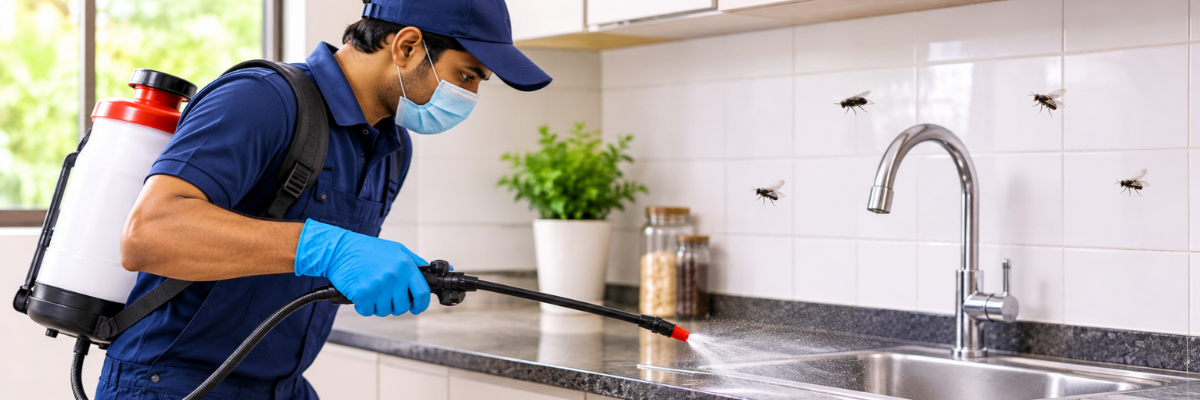
If cleaning and sealing do not stop the flies, trained help can find what you missed. A professional visit goes beyond a quick spray. It usually follows these steps:
- Inspection: The team checks kitchens, bins, drains, waste areas and entry points to find where the flies are breeding and how they get in.
- Identification: They work out which type of fly is causing the problem, because each type needs a different approach.
- Treatment plan: The team chooses suitable methods for your space, keeping food areas, children and pets in mind.
- Treatment: Technicians apply approved products to the relevant areas, focusing on breeding and resting spots.
- Advice: You receive practical tips on hygiene, waste handling and sealing gaps to keep flies away afterwards.
Homes with persistent fly activity, restaurants, canteens, food storage areas and commercial kitchens often benefit from this approach. Results depend on the fly species and the conditions on site, and a good provider will explain what to expect.
Frequently Asked Questions
How do I get rid of flies in my house fast?
Start by removing what attracts them. Clean food spills, cover waste, take out the bins and clear the drains. Close doors and windows or fit screens, and use sticky traps to catch the flies already inside. If they return within days, look for a hidden breeding source.
Why do I have so many flies in my house suddenly?
A sudden increase usually points to a new food source or breeding site. Spoiled food, an overflowing bin, a blocked drain or a damp spot can produce many flies quickly. Warm weather speeds this up.
What attracts flies to a clean home?
Even a clean home can attract flies through a small spill, a dirty drain, ripe fruit, pet food or an open door. Flies also enter from outside, drawn by cooking smells and light.
Are flies dangerous to health?
Flies can carry germs from waste onto food and surfaces, so they raise hygiene concerns. Keeping food covered, cleaning surfaces and controlling flies helps reduce the risk.
When should I call a pest control professional for flies?
Consider help when flies keep returning after thorough cleaning, when you cannot find where they breed, or when you run a kitchen, restaurant or food business where hygiene matters most. A professional can inspect the area and recommend treatment based on what they find.
Conclusion
Getting rid of flies in your home effectively comes down to a simple pattern: find what attracts them, remove it, block the entry points and reduce the flies already inside. Quick fixes such as swatting or spraying may help for an hour, but long-term results depend on dealing with the source.
Start with the kitchen, the bins and the drains, because most fly problems begin there. If the flies keep coming back, a closer inspection can save you weeks of frustration.
After more than 20 years in pest control, the team at Paradise Pest Control has seen how often a fly problem traces back to one small, overlooked source. If you are unsure where yours begins, finding the cause is the right first step. You can also revisit this article on how to get rid of flies in your home effectively to go through the steps again before you start.