

How Reticulation Piping Systems Support Preventive Termite Control

How Reticulation Piping Systems Support Preventive Termite Control
How reticulation piping systems support preventive termite control comes down to one problem: reaching the soil under a finished building. Termites live in the soil, find tiny gaps in a foundation and move in quietly, often long before anyone spots mud trails or hollow-sounding wood. That is why many builders and homeowners plan protection before the floor is laid, and a reticulation piping system is one of the ways they do it. Pipes buried during construction let technicians refresh the termite barrier later without drilling through finished floors.
Property owners who want to protect a new building often speak to a team that offers dependable pest control services in coimbatore about when and how to install one. This guide explains what the system is, how it works and what to expect.
Why Should Termite Protection Start Before Construction?
Once a building stands, the soil under and around it is hard to reach. Treating it later usually means drilling holes through floors, which is messy and costly, especially with tiles, granite or polished concrete.
Termites Enter Through Hidden Gaps
Subterranean termites travel through soil and slip into buildings through cracks in slabs, joints between walls and floors, and gaps around pipes. Many of these routes sit out of sight, so you may not know they exist until damage appears.
Treating the Soil Early Is Simpler
Before construction, the soil is open and easy to treat evenly. This is the best time to create a protective barrier between the ground and the structure. The challenge is that termite chemicals do not last forever, which is where reticulation comes in.
Damage Often Shows Up Late
Termites feed on wood, paper and other cellulose material, often from the inside. By the time you notice swollen paint, hollow-sounding timber or mud tubes, the colony may have been active for a while. Prevention costs far less than repair.
What Is a Reticulation Piping System?
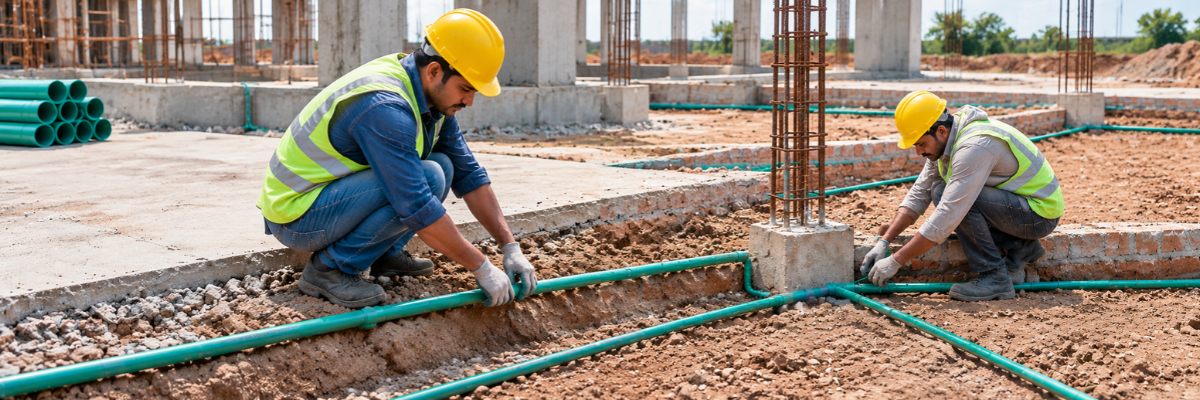
A reticulation piping system is a network of small pipes laid in the ground around and under a building during construction. Think of it as an irrigation system, but for termite protection. The pipes carry termiticide into the soil whenever the barrier needs refreshing.
How the System Works
Installers lay perforated or specially designed pipes in the soil, usually around the perimeter and in key areas under the slab. The ends come up to accessible points, often called access or injection points. Technicians then pump approved termiticide through the pipes, and it spreads into the surrounding soil.
Where the Pipes Go
Layouts vary with the building design. Pipes typically follow the foundation lines, run along the outer edges and cover vulnerable spots such as areas near plumbing, joints and entry points. A good layout aims for even coverage, so no part of the soil is left untreated.
When Installation Happens
The best time is during construction, before the slab is cast and before landscaping or paving covers the area. Installing at this stage keeps the pipes concealed and protected. Some systems can also be added to existing buildings in certain situations, though options depend on the property.
How Do Reticulation Piping Systems Support Preventive Termite Control?
The system does not stop termites by itself. It makes it easier to place and maintain a chemical barrier where termites are most likely to enter.
Even Distribution of Termiticide
Spraying soil by hand can leave patches that receive too little treatment. Pipes help spread the chemical through the soil in a more uniform way, which improves the chance of a continuous barrier.
Top-Ups Without Breaking the Floor
Termiticide breaks down over time, and protection weakens as the barrier ages. With reticulation, technicians can top up the soil treatment through the access points at planned intervals. This avoids drilling through finished floors, which saves money and keeps your floors intact.
Protection for Hidden and Hard-to-Reach Areas
Soil under slabs, along foundations and beneath built-in structures is impossible to reach once construction ends. Pipes already sitting in those areas give technicians a route to treat them later.
Easier Long-Term Planning
A system with clear access points lets property owners schedule periodic inspections and re-treatments instead of waiting for visible damage. This planned approach suits homes, apartments, offices and commercial buildings alike.
What Do Property Owners Often Overlook?
Even a well-installed system needs the right habits around it. A few points slip past many owners.
Treating installation as the finish line: The pipes are a tool, not a lifetime guarantee. The barrier needs refreshing at suitable intervals, and the schedule depends on the product and site conditions.
Covering or losing the access points: If landscaping, paving or repairs bury the injection points, future top-ups become harder. Keep a record of where they are.
Ignoring cracks and moisture: Gaps in walls, leaking pipes and damp soil near the foundation can still invite termites. Fix them early.
Leaving timber and debris near the building: Wood scraps, tree stumps and cardboard stored against walls give termites food close to your foundation. Clear them away.
Skipping inspections: A routine inspection can spot early signs, such as mud tubes, discarded wings or damaged wood, before the problem grows.
Assuming all systems are the same: Pipe quality, layout and the termiticide used vary. Ask for details before you decide.
What Does Installation and Maintenance Involve?
Every site is different, but the process generally follows a clear order. A typical outline looks like this:
- Site assessment: The team studies the plans, soil conditions and building layout to decide where pipes should go.
- Layout planning: They design a pipe network that covers the foundation lines and vulnerable areas evenly.
- Pipe installation: Technicians lay the pipes before the slab is poured and bring the access points to a reachable position.
- Initial treatment: Approved termiticide goes through the system into the soil, following product instructions.
- Documentation: The team records the pipe layout and access points so future treatments are easy.
- Periodic top-ups and inspections: Technicians return at planned intervals to refresh the barrier and check for signs of activity.
Results depend on correct installation and ongoing maintenance, so ask your provider what schedule they recommend for your property.
Frequently Asked Questions
What is a reticulation piping system for termite control?
It is a network of pipes laid in the soil around and under a building during construction. Technicians pump termiticide through the pipes to treat the soil and refresh the barrier when needed.
Is a reticulation piping system better than normal anti-termite treatment?
It solves a specific problem: it lets you re-treat the soil later without drilling floors. Standard treatment can still protect a building, but top-ups usually mean drilling and disturbing finished surfaces. The best choice depends on your building and budget.
When should a reticulation piping system be installed?
The ideal time is during construction, before the slab is poured and before paving or landscaping covers the area. Some existing buildings can add a system in certain cases, but options depend on the property.
How often does the soil need re-treatment?
It depends on the product, soil, climate and site conditions. Your provider should explain the recommended schedule for your property. Regular inspections help confirm whether a top-up is due.
Does a reticulation system mean I never need to worry about termites?
No system offers a complete guarantee. Cracks, moisture, wooden items and poor maintenance can still attract termites. Good building practice and regular inspections work alongside the system.
Conclusion
A reticulation piping system supports preventive termite control by solving a practical problem: how to reach and refresh the soil barrier once the building is finished. Even coverage, planned top-ups and no need to drill finished floors make it an appealing option for new construction.
If you are planning a build, raise the question early. Ask about layout, access points, the termiticide used and the maintenance schedule before the slab goes in.
Paradise Pest Control has served more than 5,500 clients across residential, commercial and industrial properties. If you want to understand how reticulation fits into your own project, asking the right questions early is a good place to start. You can also revisit this article on how reticulation piping systems support preventive termite control whenever you plan your next site visit.