


How to Keep Snakes Away From Your Home
A warehouse manager checking a storage unit early one morning finds something coiled behind a stack of empty sacks. It’s a moment that changes how a property owner thinks about pest prevention for good. Snakes rarely announce themselves before they arrive, and by the time someone notices one, it has often been living undetected for weeks.
This is exactly why homeowners and business owners across Coimbatore are turning to a professional Snake Control Service in Coimbatore rather than waiting for a sighting to force their hand. Prevention works better than reaction, and understanding how snakes enter properties is the first step toward keeping them out. Alongside snake-specific concerns, many residents also rely on broader pest control services in Coimbatore to keep their homes and workplaces protected year-round.
Snakes are drawn to properties for simple reasons: food, water, and shelter. When any of these are easily available, a home or commercial space becomes an attractive place to settle in quietly.
Why Snakes Enter Homes in the First Place
Most snake encounters aren’t random. They happen because a property, without anyone realizing it, offers exactly what a snake needs to survive.
Gardens with tall grass, unused storage rooms, and drainage areas near a compound wall are common access points. Snakes move along the edges of a property, following cover rather than open ground, which is why they’re often found near boundary walls, woodpiles, or thick vegetation.
Homes near agricultural land or open plots face a slightly higher chance of snake activity, simply because these spaces support the rodents and insects that snakes hunt. A property with a rodent problem, even a minor one, can unintentionally become more appealing to snakes looking for an easy meal.
Water sources matter too. A leaking pipe, a stagnant puddle near a garden, or an open drain can quietly attract snakes during drier months when they need to find hydration close to shelter.
Benefits of Professional Snake Control
Handling a snake sighting alone is risky, and most homeowners simply don’t have the training to identify whether a snake is venomous or how to safely manage the situation. This is where professional expertise makes a real difference.
Trained technicians know how to inspect a property systematically, checking entry points that an untrained eye would likely miss. They understand snake behavior well enough to identify which areas of a property are genuinely at risk versus which are low priority.
Professional treatment also focuses on long-term prevention rather than a one-time fix. Instead of simply removing a snake that’s already been spotted, the goal is to reduce the conditions that attracted it in the first place, so the problem doesn’t repeat itself a few months later.
There’s also a safety factor that shouldn’t be underestimated. Attempting to handle or relocate a snake without proper knowledge can lead to bites, and some species found in and around Coimbatore can be venomous. Leaving this task to trained professionals protects both people and pets.
Common Mistakes Homeowners Make
One of the biggest mistakes is waiting until a snake is actually seen before taking any action. By that point, the snake may have already been on the property for some time, and there could be more than one entry point contributing to the issue.
Another common error is assuming that clearing visible garden growth is enough. While overgrown grass is a factor, hidden gaps in walls, gaps under doors, and unsealed drainage openings are just as important and are far easier to overlook.
Some property owners try home remedies they’ve read about online, hoping a particular smell or substance will keep snakes away permanently. These methods can offer limited, short-term results at best, and relying on them instead of a proper inspection often means the underlying attraction factors remain untouched.
Ignoring rodent activity is another mistake that indirectly invites snakes. Since rodents are a primary food source, addressing rodent control alongside snake prevention gives much stronger results than treating each issue separately.
What Professional Snake Control Actually Involves
A structured approach makes all the difference between a temporary fix and lasting protection. Most professional visits follow a similar process, adjusted based on what the property actually needs.
- Inspection and identification – A detailed walk-through to spot hiding places, likely entry points, and any conditions attracting snakes to the property.
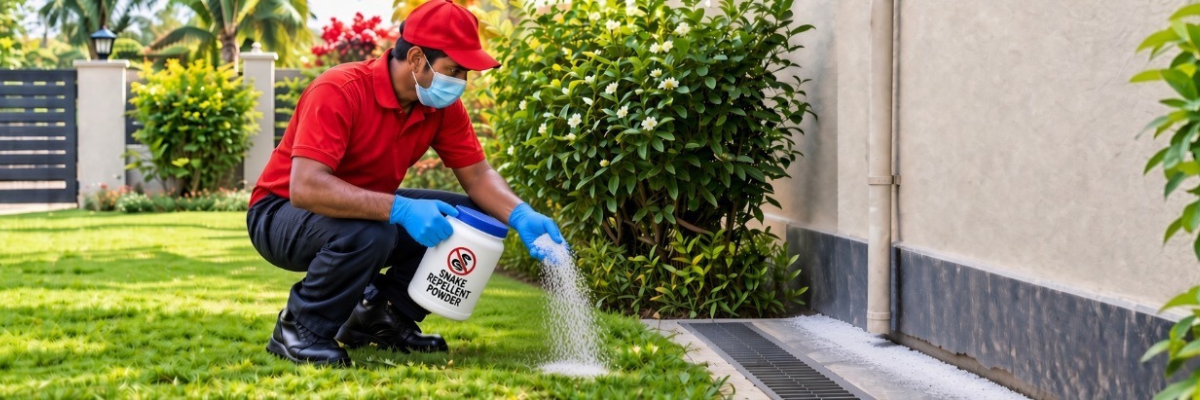
- Repellent application – Safe, targeted use of snake repellent granules around vulnerable areas such as boundary walls, drainage points, and storage zones.
- Prevention and exclusion – Sealing or addressing gaps and access points to reduce the chances of snakes entering again.
- Ongoing monitoring guidance – Practical recommendations for the property owner to maintain a safer environment over time, rather than a single isolated treatment.
This kind of layered approach is far more effective than reacting to a single sighting, since it addresses the root causes instead of just the symptom.
Frequently Asked Questions
Do snake repellents actually work?
Repellent granules can help reduce snake activity when applied correctly around entry points and vulnerable areas, but they work best as part of a complete prevention plan rather than a standalone solution.
How do I know if a snake is venomous?
It’s difficult to tell without proper training, since several harmless and venomous species look similar to an untrained eye. It’s safer to avoid direct contact and call a professional for identification and removal.
Can snakes enter homes through small gaps?
Yes. Even a narrow gap under a door, around a pipe, or near a drainage point can be enough for a snake to enter, which is why sealing these areas is an important preventive step.
Is snake activity more common during certain seasons?
Many property owners notice more snake activity during and after heavy rainfall, since flooding pushes snakes out of their natural habitats and toward drier ground, including gardens and compounds.
How often should a property be inspected for snake risk?
This depends on the property’s surroundings, but homes and businesses near open land, gardens, or storage-heavy spaces benefit from periodic inspections rather than waiting for a sighting to prompt action.
Conclusion
Keeping snakes away from a property isn’t about a single quick fix. It comes down to understanding what attracts them, addressing those conditions early, and relying on trained professionals for inspection and treatment rather than guesswork.
With over 20+ years of experience and 5,500+ satisfied clients across residential, commercial, and industrial properties, Paradise Pest Control brings the kind of practical, tested expertise that this kind of prevention work genuinely requires. If you’d like a deeper look at what a thorough approach involves, our earlier guide on How to Keep Snakes Away From Your Home walks through it in more detail.