


How to Protect Your New Home from Termites
Moving into a new home is exciting. The paint is fresh, the furniture is new, and everything feels perfect. However, one problem can go unnoticed until it is too late: termites. Families who have just built or bought a home rarely think about pest control on day one. Yet, this is exactly when termite prevention matters most. Termites do not wait for an invitation. They can enter through small cracks in the foundation, hide inside wooden furniture, or move through soil contact points that are easy to overlook. If you are wondering how to protect your new home from termites, acting early can make prevention easier and more affordable. Many homeowners in Coimbatore choose the termite control service in coimbatore offered by professionals to protect their homes from the start instead of dealing with structural damage later.
Coimbatore’s warm and humid climate can create suitable conditions for termite activity. Rainfall and moisture can also increase the risk around homes. That is why many households rely on established pest control services in coimbatore for termite prevention instead of trying random home remedies. This guide explains practical ways to protect a new home from termites without unnecessary jargon.
Why Termite Prevention Matters So Much in a New Home
A new building may look strong and secure, but termites can still find ways inside. New homes can contain timber, plywood fittings, wooden door frames, and other materials that termites may target. Soil around the foundation can also provide an easy route into the structure if proper prevention measures are not in place.
Think about a new office space. Wooden shelving, flooring, and other fittings may be installed within a short period. If termite protection was not included during construction, these materials can become potential food sources for termites nearby. The same applies to a newly built house. Wardrobes, doors, window frames, and other wooden fittings can become targets if homeowners overlook termite prevention.
Termite damage can also remain hidden for months. Colonies may stay inside walls, under flooring, or near wooden structures without obvious signs. Over time, affected wood can become hollow or weakened. By the time visible damage appears, repair costs may already be much higher than early prevention.
Common Overlooked Risks Homeowners Miss
Many homeowners assume termite problems only affect old buildings or damaged wood. However, new homes can also have several termite risk factors. These risks often go unnoticed during the excitement of moving in.
Untreated soil beneath the foundation is one important concern. If pre-construction soil treatment was not completed properly, termites may find a route toward the structure. Moisture can also increase the risk. Leaking pipes, poor drainage, and garden beds placed close to the foundation can create damp areas that attract termite activity.
Wooden furniture brought into a new home can also introduce risks. Furniture stored in warehouses or transported over long distances may sometimes contain hidden termite activity. Firewood and leftover construction timber can create another problem when stored close to the house. These materials may attract termites already present in the surrounding soil.
Termite damage costs can vary based on the property and extent of infestation. However, prevention is generally easier to manage than repairing serious structural damage. This makes early termite protection an important part of maintaining a new home.
Benefits of Professional Termite Protection
Hiring a professional service instead of relying only on DIY sprays or store-bought products can provide several practical benefits.
Professionals can use targeted treatment methods based on the property and level of risk. These methods may include soil treatment and termite barriers that help reduce the chances of termites reaching the structure. Surface sprays alone may not address termite colonies hidden underground or inside structural areas.
A trained technician can also inspect areas that homeowners may overlook. These areas can include expansion joints, plumbing entry points, subfloor spaces, and gaps around the foundation. A detailed inspection can help identify potential termite activity before visible damage becomes serious.
Professional prevention can also help reduce long-term costs. Treating a home during or soon after construction can be easier than repairing structural damage after an infestation spreads. Preventive termite protection helps protect both the structure and the investment you have made in your new home.
Common Mistakes People Make When Moving Into a New Home
One common mistake is assuming that a new home does not need termite protection. A building may be new, but that does not automatically mean it has complete termite protection. Some construction projects may include certain treatments, while others may not cover every potential risk area.
Another mistake is skipping pre-construction soil treatment to reduce initial costs. This can leave the property more exposed to termite entry from the surrounding soil. Some homeowners also wait until they see termites before contacting a professional. By then, hidden activity may have already caused damage.
Placing wooden furniture directly against exterior walls can also increase risk in some situations. Ignoring small water leaks near the foundation is another common mistake. Storing firewood, scrap wood, or leftover construction materials close to the house can also create suitable conditions for termite activity. Addressing these issues early can make termite prevention easier.
What Professional Termite Protection Actually Involves
Termite prevention is not always a single treatment. A professional plan can involve several steps based on the property and its construction stage. Here is a simplified look at what termite protection may include:
- Pre-construction soil treatment — Treatment is applied to the soil before the foundation is laid. This helps create a barrier that can reduce termite entry from below.
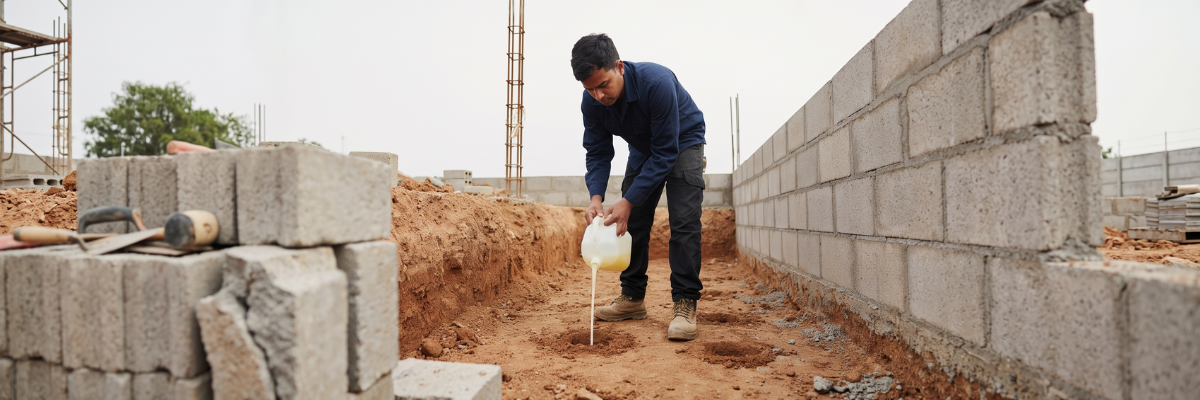
- Post-construction barrier treatment — If pre-construction treatment was not completed, professionals can assess the property and apply suitable treatment around the foundation and other vulnerable areas.
- Wooden furniture and fixture inspection — Doors, window frames, wardrobes, and other wooden fittings can be checked for signs of termite activity, damage, or moisture.
- Moisture and drainage assessment — Professionals can identify leaks, poor drainage, and damp areas near the foundation that may increase termite risk.
- Periodic follow-up inspections — Regular inspections can help identify new termite activity early and determine whether additional treatment is required.
This layered approach provides more complete protection than relying on a quick surface treatment. It also allows the treatment plan to match the property. For example, an apartment may have different risks from an independent house with a garden and compound wall.
Frequently Asked Questions
How soon after moving into a new home should I get termite protection done?
Ideally, termite protection should be planned during construction, especially before the foundation is laid. If this was not done, arrange a professional inspection and suitable post-construction treatment as soon as possible instead of waiting for visible damage.
Can I prevent termites without chemical treatment?
Reducing moisture and keeping wood away from soil can lower termite risk. However, these steps may not provide complete protection. Professional treatment can provide additional protection, especially in areas where termite activity is common.
How do I know if my new home already has a termite problem?
Look for mud tubes near walls or foundations, hollow-sounding wood, discarded wings near windows or doors, and bubbling or cracked paint without an obvious cause. These signs may indicate termite activity and should be checked by a professional.
Is termite treatment a one-time process?
Some treatments can provide protection for several years, but termite prevention is not necessarily permanent. Periodic inspections can help confirm that the protective measures remain effective and identify new activity early.
Does termite treatment affect the health of people living in the home?
Professional pest control companies use products approved for their intended applications. Treatment should always follow the product instructions and professional safety guidance. Ask your service provider about ventilation, precautions, and re-entry times after treatment.
Conclusion
Knowing how to protect your new home from termites can help you take action before serious damage occurs. Untreated soil, moisture, and vulnerable wooden fittings can create opportunities for termites to enter a property. Addressing these risks early can help protect your home and reduce the chance of expensive repairs later.
With over 20+ years of experience and more than 5,500 happy clients across Coimbatore, Paradise Pest Control understands the importance of early termite protection for new homeowners. If you found this guide on how to protect your new home from termites useful, consider getting your home professionally assessed before a small risk becomes a bigger problem. You can also reach out through the contact us page to ask questions and get guidance suited to your home. Taking action early is always easier than dealing with termite damage later.