

Mosquito Control for Apartments: Common Problem Areas and Solutions

Mosquito Control for Apartments: Common Problem Areas and Solutions
Mosquito Control in Coimbatore is important for apartment residents who want to maintain a comfortable and hygienic living environment. Mosquitoes can breed in stagnant water around terraces, balconies, drainage areas, gardens, and other shared spaces. In apartment complexes, these areas may affect several homes if they are not inspected and maintained regularly.
Although individual residents can take steps to reduce mosquitoes inside their homes, effective prevention also requires attention to common areas and outdoor spaces. Identifying potential breeding sites and arranging suitable pest control measures can help apartment communities manage mosquito activity more effectively.
Why Is Mosquito Control Important in Apartments?
Apartment buildings have several shared spaces where water can collect unnoticed. Roofs, parking areas, landscaped gardens, utility rooms, and drainage systems may create suitable conditions for mosquitoes when maintenance is inadequate.
Mosquitoes can enter homes through open windows, doors, balconies, and gaps in window screens. Even when individual flats are clean, nearby breeding sites in common areas may continue to cause problems.
Regular inspections, proper water management, and appropriate mosquito control measures are important for reducing mosquito activity around apartment buildings.
Common Mosquito Breeding Areas in Apartments
1. Terraces and Rooftops
Terraces may collect rainwater in uneven surfaces, unused containers, blocked drains, and discarded materials. Air-conditioning drainage and other utility installations can also create water collection points if they are not maintained properly.
Apartment management teams should inspect rooftops regularly, remove unnecessary containers, and ensure that rainwater drains away efficiently.
2. Balconies and Flower Pots
Plant saucers, decorative containers, and unused buckets on balconies can collect water. These small locations may be overlooked during routine cleaning.
Residents should empty standing water regularly, clean plant saucers, and avoid leaving open containers outside after rainfall.
3. Basement and Parking Areas
Basements and covered parking spaces may develop puddles due to leaking pipes, poor drainage, or rainwater entering the building. These areas can be difficult to inspect because they receive less sunlight and may have limited ventilation.
Building maintenance teams should repair leaks, clear drainage channels, and arrange inspections whenever standing water is noticed.
4. Gardens and Landscaping Areas
Gardens, lawns, and landscaped areas may contain discarded pots, blocked drains, or other objects that collect rainwater. Overwatering can also leave water standing in unsuitable locations.
Regular garden maintenance, proper irrigation, and removal of water-holding waste can help reduce potential mosquito breeding sites.
5. Water Storage and Drainage Systems
Water tanks, sumps, drainage channels, and utility areas need appropriate maintenance. Poorly covered water storage containers may allow mosquitoes to access standing water.
Ensure that water storage tanks have secure, well-fitting covers. Drainage systems should be checked and cleaned appropriately, and any maintenance work should follow safe water-handling practices.
Practical Mosquito Prevention Tips for Apartment Residents
Residents can help reduce mosquito activity by following a few simple practices:
Empty standing water from buckets, trays, plant saucers, and unused containers.
Keep windows and doors fitted with suitable insect screens where practical.
Use mosquito nets or other appropriate personal protection when needed.
Keep balconies and utility spaces free from discarded containers.
Report leaking pipes, blocked drains, and water accumulation to the apartment maintenance team.
Keep household waste in suitable bins and dispose of unwanted items properly.
Inform the management team when mosquitoes are repeatedly seen in common areas.
Individual preventive measures work best when residents and apartment management teams cooperate.
Responsibilities of Apartment Management Teams
Apartment associations and property managers play an important role in maintaining shared spaces. A consistent maintenance plan can help identify conditions that support mosquito breeding before they become widespread.
Management teams should arrange regular inspections of rooftops, basements, parking areas, gardens, drains, and water storage facilities. Maintenance records can help track recurring problems and confirm that identified issues have been addressed.
Where mosquito activity continues, a professional assessment can help identify potential breeding sources and determine suitable control measures for the property.
When Should Apartments Arrange Professional Mosquito Control?
Routine cleaning and water management are important, but they may not always be enough when mosquito activity remains high. Professional assistance may be useful when:
Mosquitoes are repeatedly entering multiple flats.
Residents report persistent mosquito problems in common areas.
Mosquito activity continues despite removing standing water.
Large outdoor or shared spaces require a planned inspection.
The apartment management team needs a coordinated mosquito management programme.
A professional inspection can help identify problem areas and recommend suitable treatment options based on the building layout and site conditions.
Professional Mosquito Control in Coimbatore for Apartments
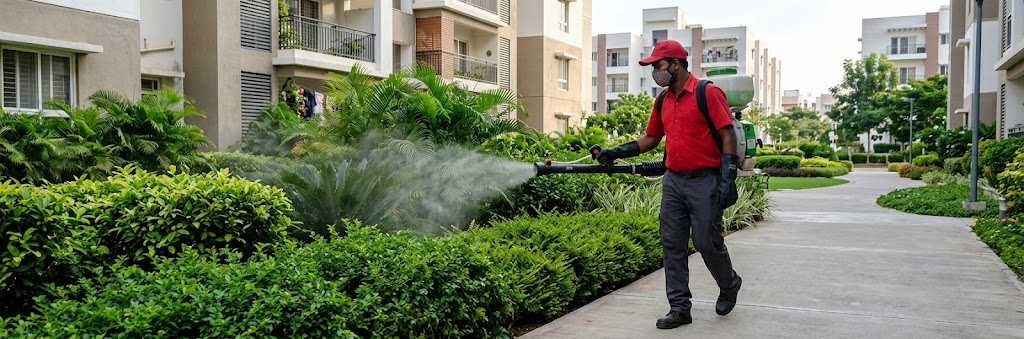
Mosquito Control in Coimbatore can help apartment communities address persistent mosquito activity through suitable inspection and treatment recommendations. An effective approach should consider the property as a whole, including shared outdoor spaces, drainage areas, and locations where water may collect.
Paradise Pest Control provides pest control services to help property owners address pest-related concerns. Apartment associations and property managers experiencing recurring mosquito problems can enquire about an appropriate assessment for their premises.
Professional treatment should be selected according to site conditions and applied with suitable precautions for residents, children, pets, and the surrounding environment. Treatment alone should not replace routine maintenance and the removal of standing water.
Conclusion
Mosquito control in apartment complexes requires cooperation between residents and building management teams. Terraces, balconies, basements, gardens, drainage systems, and uncovered water containers should be inspected regularly to identify potential breeding areas.
By removing standing water, maintaining drainage systems, using suitable protective measures, and arranging professional assessments when necessary, apartment communities can manage mosquito activity more effectively.
Consistent prevention and coordinated maintenance are essential steps towards a cleaner and more comfortable apartment environment.