
Why Professional Disinfection Is Important in Hospitals and Clinics

Why Professional Disinfection Is Important in Hospitals and Clinics
Why professional disinfection is important in hospitals and clinics becomes clear once you look at how germs actually move through a healthcare building. A ward can look spotless after the morning clean, yet bed rails, door handles, and call buttons may still carry bacteria and viruses that nobody can see.
This gap between “looks clean” and “is hygienically safe” is where infections can spread. Patients, visitors, and staff touch the same surfaces all day, so even a small lapse can affect people who are already vulnerable.
Routine housekeeping is essential, but healthcare spaces often need more than wiping and mopping. A trained team offering the best disinfection service in coimbatore can assess the premises, choose suitable products, and treat high-risk areas in a planned and consistent way.
Why Is Professional Disinfection Necessary in Healthcare Settings?
Hospitals and clinics bring together people with infections and people who are at higher risk of catching one. That includes newborns, older adults, surgical patients, and anyone with a weakened immune system.
Healthcare-Associated Infections Are a Real Concern
Infections picked up during medical care are known as healthcare-associated infections. Figures vary by source and country, but the World Health Organization estimates that around 7 in every 100 patients in acute-care hospitals in high-income countries acquire at least one such infection, and around 15 in every 100 in low- and middle-income countries.
These infections can extend hospital stays, increase treatment costs, and in serious cases threaten lives. Surfaces are only one route of spread, but they are one that can be managed with good hygiene practice.
Cleaning and Disinfection Are Not the Same Thing
Cleaning removes dust, dirt, and some germs from a surface. Disinfection uses approved products to reduce disease-causing organisms to a safer level. A surface that looks clean may still need disinfecting, particularly in places that many people touch.
Healthcare facilities usually need both, applied in the right order and at the right frequency. When nobody is sure which areas need which level of attention, professional guidance can help set a clear routine, and dependable pest control services in coimbatore can support the same hygiene goals by keeping pests away from patient and food areas.
Which Areas in Hospitals and Clinics Are Often Overlooked?
Operating theatres and intensive care units usually receive strict attention. The risk often sits in the everyday spaces that feel ordinary.
Waiting Rooms and Reception Areas
Dozens of people with different health conditions may share the same chairs, counters, pens, and card machines in a single day. These shared items are touched constantly and are rarely disinfected between users.
High-Touch Surfaces Throughout the Building
Light switches, lift buttons, handrails, door push plates, washroom taps, and water dispenser buttons are used by almost everyone who enters. Because they blend into the background, they are easy to miss during a routine clean.
Equipment and Furniture
Examination beds, weighing scales, blood pressure cuffs, trolleys, and shared medical equipment can carry germs from one patient to the next if they are not handled properly. In busy outpatient clinics, there may be little time between patients to treat them thoroughly.
Air-Conditioning Vents and Storage Areas
Dust and moisture can build up in vents and ducts, and storage rooms often receive less attention than patient areas. Staff rooms and break areas also deserve a place in the plan, because staff move between them and patient areas throughout the day.
Pest-Prone Corners
Cockroaches, flies, and rodents can carry germs on their bodies and legs. A facility with pest activity near waste areas, kitchens, or storage rooms may have a hygiene concern that cleaning alone cannot solve.
What Are the Benefits of Professional Disinfection?
Trained professionals bring planning, equipment, and consistency that can be difficult to maintain through day-to-day housekeeping alone.
Reduced Risk of Cross-Infection
The main benefit is a lower chance of germs passing between patients, staff, and visitors. Proper disinfection cannot remove every risk, but it supports the wider infection control practices a healthcare facility already follows.
Better Coverage of Hard-to-Reach Areas
Spray and fogging methods can reach corners, undersides, and equipment surfaces that a cloth may miss. A planned room-by-room approach also reduces the chance that an area gets skipped out of habit.
Correct Products and Contact Time
Every disinfectant has a recommended concentration and contact time, which is how long it should stay on a surface to work. Wiping it away too early can reduce its effect. Trained technicians follow product instructions and use approved products suitable for the setting.
Consistent Standards on Busy Days
Staff priorities change when emergencies arise. A scheduled programme keeps hygiene standards steady even when the facility is under pressure.
Support for Audits and Patient Confidence
Documented, regular disinfection helps a facility demonstrate good hygiene practice during inspections. Patients also notice cleanliness, and a visibly well-maintained space builds trust.
What Mistakes Should Hospitals and Clinics Avoid?
Even well-run facilities can fall into habits that reduce the effectiveness of their hygiene routines.
Treating cleaning and disinfection as one job: Mopping with a basic floor cleaner may leave many germs behind. Disinfectants generally work best on a surface that has already been cleaned, because dirt and organic matter can reduce their effect.
Using the wrong dilution: A solution that is too weak may not work as intended. One that is too strong may damage equipment, irritate staff, or leave unwanted residue. Always follow the product label.
Not allowing enough contact time: Wiping a surface dry immediately after applying a disinfectant may not give the product time to work.
Disinfecting only after an outbreak: Waiting for a problem before acting leaves the facility exposed. A regular schedule is usually more effective than occasional emergency measures.
Ignoring less obvious areas: Storage rooms, staff areas, waiting lounges, and ambulance interiors are often left out of the plan, even though people and equipment move between them constantly.
Ignoring pests: A pest problem can undermine an otherwise careful hygiene routine. Pests should be reviewed as part of the same plan.
What Does Professional Disinfection Involve?
A good disinfection service is more than a quick spray. It follows a clear process, and each step has a purpose.
1. Inspection and Assessment
The team inspects the premises, notes high-risk areas, reviews the layout, and decides on a suitable method for each space.
2. Preparation
Areas are prepared, sensitive equipment is protected where needed, and staff are told which sections to avoid and for how long.
3. Pre-Cleaning
Visible dirt is removed first so that the disinfectant can reach the surface itself.
4. Application
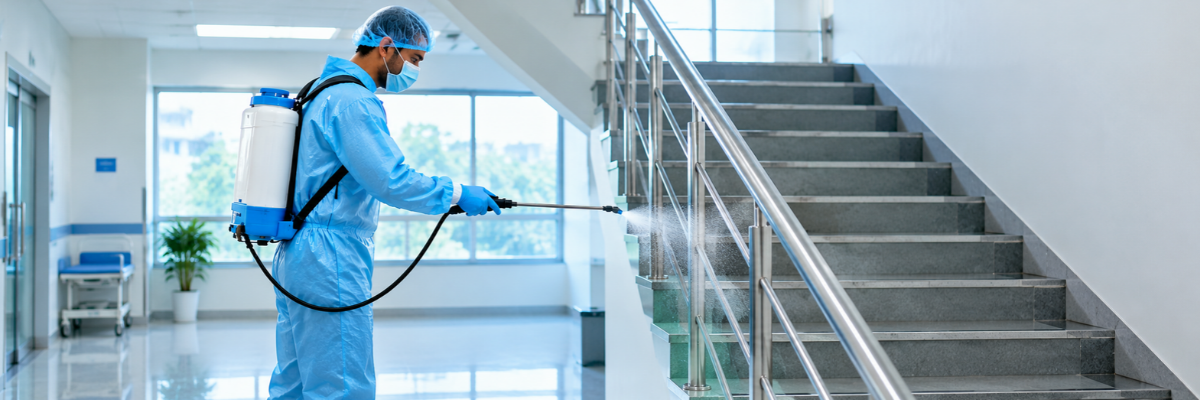
Trained technicians apply approved disinfectants using spray or fogging equipment, covering floors, walls, furniture, and high-touch points according to product instructions.
5. Contact Time and Ventilation
The treated area stays closed for the recommended period, then gets ventilated before use.
6. Review and Guidance
The team shares hygiene recommendations and may suggest a schedule suited to the facility.
How Often Should Disinfection Be Done?
There is no single answer. A large hospital ward needs far more frequent attention than a small consulting clinic. High-touch areas may need daily attention from in-house staff, with professional treatment scheduled on top of that, whether monthly, quarterly, or after events like an outbreak or renovation.
What Should You Ask a Provider?
Before hiring a service, ask which disinfectants they use, how they manage contact time, and how they plan around patient movement. Clear, specific answers are a good sign. Vague ones may be a reason to look further.
When Should You Consider Bringing in Professionals?
Many facilities already have a housekeeping team, and that remains the foundation of daily hygiene. Professional help is worth considering when the demands go beyond what that team can manage alone.
Consider arranging an assessment if:
- You are opening a new clinic or reopening after renovation.
- There has been an infection outbreak or a cluster of cases.
- Your facility has many high-traffic shared areas.
- Staff do not have the time or equipment for deeper treatment.
- You notice pests near patient, food, or waste areas.
- You want a documented schedule to support audits or accreditation.
A professional assessment should consider the layout, patient flow, areas of concern, and the suitability of different methods. The provider should also explain any precautions required during and after treatment.
Frequently Asked Questions
Why is disinfection important in hospitals and clinics?
Healthcare buildings bring together people who are already unwell or at higher risk of infection. Disinfection reduces the number of harmful germs on surfaces, which supports efforts to prevent cross-infection between patients, staff, and visitors.
What is the difference between cleaning and disinfecting?
Cleaning removes dirt, dust, and some germs from surfaces. Disinfecting uses approved products to reduce disease-causing organisms. Cleaning usually comes first, followed by disinfection on the cleaned surface.
How often should a hospital or clinic be professionally disinfected?
It depends on the size of the facility, patient volume, and type of care provided. Busy hospitals often follow a regular schedule with deeper treatments at set intervals. Smaller clinics may do well with periodic professional treatment alongside daily in-house routines. An extra round is sensible after an outbreak or major repair.
Which areas in a clinic need the most attention?
High-touch surfaces usually come first, such as door handles, reception counters, chairs, light switches, handrails, examination beds, and shared equipment. Washrooms, waiting areas, and ventilation points also deserve regular attention.
Is professional disinfection safe for patients and staff?
When done correctly with approved products, it is intended to be safe. Reputable providers plan the work around patient movement, follow the recommended contact time, and ventilate areas before they return to use. If you have specific concerns, ask the provider to explain their method before work begins.
Conclusion
Learning why professional disinfection is important in hospitals and clinics starts with understanding how easily germs can move between people and surfaces. Regular cleaning keeps a facility tidy, but long-term protection also involves the right products, proper contact time, thorough coverage, and a schedule that is actually followed.
Start by looking at the places people touch most and the areas where routine cleaning tends to stop short. If gaps remain, a professional assessment can help identify them and suggest a suitable plan.
Paradise Pest Control has experience working across residential, commercial, and industrial properties, with over 20 years of experience and more than 5,500 clients served. When hygiene concerns become difficult to manage alone, understanding the risk areas is an important first step. You can also revisit this article on why professional disinfection is important in hospitals and clinics to review the key points before you plan your next hygiene review.